As 5G smartphones become the global standard, many users are asking a critical question: Does 5G drain your phone battery faster?
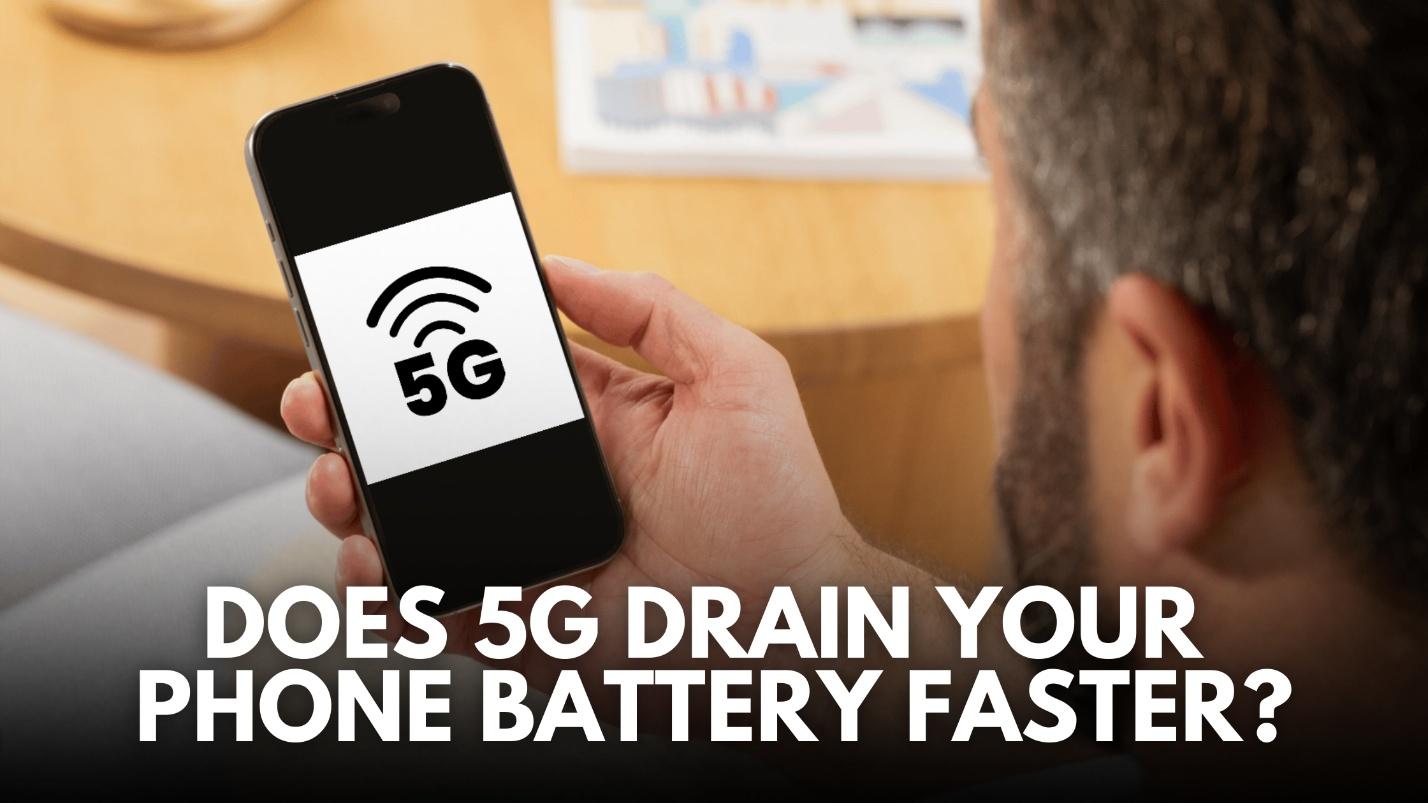
The short answer is: it depends. While early 5G phones did experience higher battery consumption, modern devices and improved network infrastructure have significantly reduced the issue. Still, under certain conditions, 5G can use more power than 4G.
Meanwhile, if you are searching for a platform where you can indulge on Pinoy and international card games online, check out GZone.ph.
In this article, we’ll break down how 5G affects battery life, why it happens, and what you can do to optimize your phone’s performance.
What Is 5G, and How Is It Different from 4G?
5G is the fifth generation of mobile network technology. Compared to 4G LTE, 5G offers:
- Faster download and upload speeds
- Lower latency
- Higher bandwidth
- Improved device connectivity
Unlike 4G, 5G operates across multiple spectrum bands:
- Low-band 5G – Wider coverage, similar speeds to LTE
- Mid-band 5G – Balanced speed and coverage
- High-band (mmWave)—Extremely fast speeds but limited range
Because of these different frequency bands, power consumption can vary significantly.
Why Did Early 5G Phones Drain Battery Faster?
When 5G first launched, devices had to manage both 4G and 5G radios simultaneously. Phones used what’s called Non-Standalone (NSA) architecture, meaning they relied on existing 4G infrastructure to support 5G connections.
This caused:
- Dual network signaling
- Increased modem activity
- Higher background power draw
For example, early 5G devices like the Samsung Galaxy S20 and iPhone 12 were reported to consume more battery when connected to 5G compared to LTE.
Does 5G Still Drain Battery Faster in 2026?
In most modern smartphones, the difference is much smaller.
Newer chipsets like
- Qualcomm Snapdragon 8 Gen 3
- Apple A17 Pro
are built using advanced fabrication processes (3 nm and 4 nm), making them far more energy efficient. These chips integrate 5G modems directly into the system-on-chip (SoC), reducing power draw.
Additionally, many carriers now use Standalone (SA) 5G networks, which no longer rely heavily on 4G infrastructure. This reduces the dual-connection drain seen in earlier years.
So today, 5G does not automatically mean massive battery loss.
When Does 5G Drain More Battery?
Even with improvements, there are scenarios where 5G can consume more power:
1. Weak 5G Signal
If you’re in an area with unstable 5G coverage, your phone constantly switches between 4G and 5G. This signal hunting increases power usage.
2. mmWave Usage
High-band 5G (mmWave) offers blazing-fast speeds but requires more energy because:
- It uses higher frequencies.
- Signal penetration is weaker.
- Phones must maintain stronger radio output.
3. High-Speed Data Usage
Streaming 4K videos, cloud gaming, or large downloads over 5G drains battery faster—not because of 5G alone, but because of increased data processing and screen usage.
Real-World Battery Comparison: 5G vs. 4G
Studies and user tests show:
- In strong coverage areas, 5G may reduce battery life by 5–10% more than LTE.
- In poor signal areas, battery drain can increase by 15–20%.
- In optimized SA networks, the difference is often negligible.
For average daily use—social media, messaging, browsing—most users won’t notice a dramatic change.
How Smartphones Optimize 5G Battery Usage
Modern devices include intelligent features that manage 5G automatically.
For example, the iPhone 15 Pro uses Smart Data Mode, which switches to LTE when 5G speeds are not necessary. Similarly, many Android devices powered by Qualcomm chipsets use adaptive connectivity to reduce unnecessary radio usage.
These systems monitor:
- App data demands
- Network strength
- Screen activity
- Background tasks
The phone dynamically adjusts network usage to conserve battery.
Does 5G Drain More Battery Than Wi-Fi?
In most cases, Wi-Fi consumes less power than 5G, especially when connected to a stable router.
Wi-Fi:
- Requires less transmission power
- Maintains stable short-range connectivity
- Uses efficient local network processing
If battery life is your priority, connecting to Wi-Fi when available is still the best choice.
Tips to Reduce 5G Battery Drain
If you’re concerned about battery life, here are practical solutions:
1. Turn Off 5G in Weak Coverage Areas
You can manually switch to LTE in your network settings if 5G coverage is inconsistent.
2. Enable Adaptive Connectivity
Most phones have automatic network optimization features. Keep them enabled.
3. Reduce Background App Activity
Apps constantly syncing over 5G can increase power consumption. Disable unnecessary background data.
4. Use Wi-Fi When Available
Switching to Wi-Fi reduces mobile radio usage and extends battery life.
5. Keep Software Updated
Manufacturers regularly optimize modem performance through firmware updates.
Battery Technology Has Improved Too
It’s important to remember that modern smartphones now feature:
- Larger battery capacities
- More efficient OLED displays
- AI-powered battery management
- Faster charging technologies
So even if 5G slightly increases consumption, overall battery performance remains strong compared to phones from five years ago.
Does 5G Cause Long-Term Battery Damage?
No. Using 5G does not damage your battery.
Smartphones use lithium-ion batteries with built-in charging protection systems. Network usage affects daily battery percentage but does not harm long-term battery health.
Factors that actually impact battery lifespan include:
- High heat exposure
- Frequent full discharges (0%)
- Constant 100% charging
- Poor-quality chargers
Network type has minimal long-term impact.
Is It Worth Turning Off 5G?
It depends on your priorities.
You may want to turn off 5G if:
- You live in an area with weak 5G coverage.
- Battery life is more important than speed.
- You rarely use high-speed data services.
However, if you:
- Stream high-quality content
- Download large files
- Use cloud-based apps
- Play online games
Then 5G’s speed benefits may outweigh the small battery trade-off.
The Final Verdict: Does 5G Drain Your Phone Battery Faster?
Yes—but only slightly in most cases.
Early 5G phones showed noticeable battery drain due to inefficient dual connectivity. Today, improved chipsets, standalone 5G networks, and smart connectivity features have minimized the difference.
In strong coverage areas, battery drain differences are often small. In weak signal zones, 5G can use more power due to constant switching and signal searching.
Ultimately, 5G is no longer the major battery drain it once was.
If you want the best balance between speed and battery life:
- Use adaptive network settings
- Connect to Wi-Fi when possible
- Keep your device updated.
With modern smartphones, you can enjoy 5G performance without sacrificing all-day battery life.
Frequently Asked Questions
Does 5G drain battery faster than LTE?
Sometimes, especially in weak signal areas. But on modern devices, the difference is usually small.
Is 5G bad for battery health long-term?
No. It affects daily usage but does not permanently damage lithium-ion batteries.
Should I disable 5G to save battery?
Only if coverage is poor or you prioritize battery life over high-speed connectivity.